About
I didn't start my career in a boardroom. I started it writing code, building websites, and engineering sound from my room at my parents' place near Stuttgart.
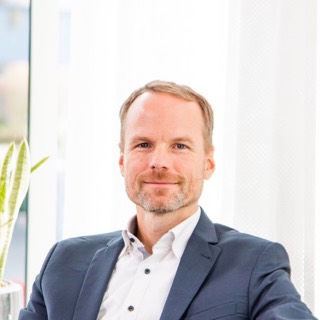
That maker instinct, the desire to actually build things instead of just talking about them, has shaped everything since I joined Bosch in 2006. Today I lead the Bosch R&D Center in Lund, Sweden, as VP Engineering: 250 engineers working across nine divisions at the intersection of software, AI, and connected systems.
The most important thing I've built along the way isn't a product. It's an understanding of how great technology happens when people from different cultures, disciplines, and backgrounds work toward a shared purpose. I've led global engineering teams in Germany, spent eight years in Budapest, four of them as Director of Engineering for Automotive Steering across Central and Eastern Europe, and now call Sweden home.
There's no shortage of enthusiasm around AI. What's harder to find is honest, grounded experience of what it actually takes to embed it inside a large, complex organization: the experiments that worked, the ones that didn't, and what comes next. That's the work I do every day.
How I think about AI
Scaling AI is not just a technical challenge. It's an organizational one: culture, structure, and engineering discipline matter as much as algorithms.
The seniority pipeline is the AI story the industry is mispricing.
The loud consensus says junior engineers are doomed and seniors are safe. I think it's closer to the inverse. AI-native juniors ramp faster than ever. Rare seniors stay irreplaceable for deep domain and legacy knowledge. The mid-level is the tier actually being squeezed, and the mid-level is the pipeline that produces tomorrow's seniors. Cutting it for short-term efficiency quietly dismantles future expertise.
AI as more outcome, not fewer people.
AI-as-cost-cutting is the short-sighted executive frame. The companies that win won't have the biggest AI budgets; they'll move from pilot to production fastest and use AI to produce more, growing top line and margin rather than just shrinking headcount. There's a difference between being AI-first and being AI-native, and it decides how long an incumbent survives a native challenger.
Speaking & writing
- What are we actually racing for? Reflections from Almedalen 2026 Panelist, "The Global AI Innovation Race: Can Sweden and Europe Close the Gap?" (Techarena, with Sweden's Minister for Public Administration) and the Eidra × Techarena roundtable "Från AI-pilot till affärer", Visby, June 2026
- The technology gap closes fast. The culture gap doesn't. Our AI journey, 2021 → 2024 From a series on twenty years of building at Bosch, LinkedIn, June 2026
- More writing on LinkedIn Weekly on AI transformation realities, leadership & culture, and the maker perspective
Contact
If you're thinking about AI transformation in industrial or software-intensive organizations, building bridges across engineering cultures, or shaping what a software-defined future looks like in practice, I'd love to connect.